
Recent from talks
Santiago de Veraguas
Knowledge base stats:
Talk channels stats:
Members stats:
Santiago de Veraguas
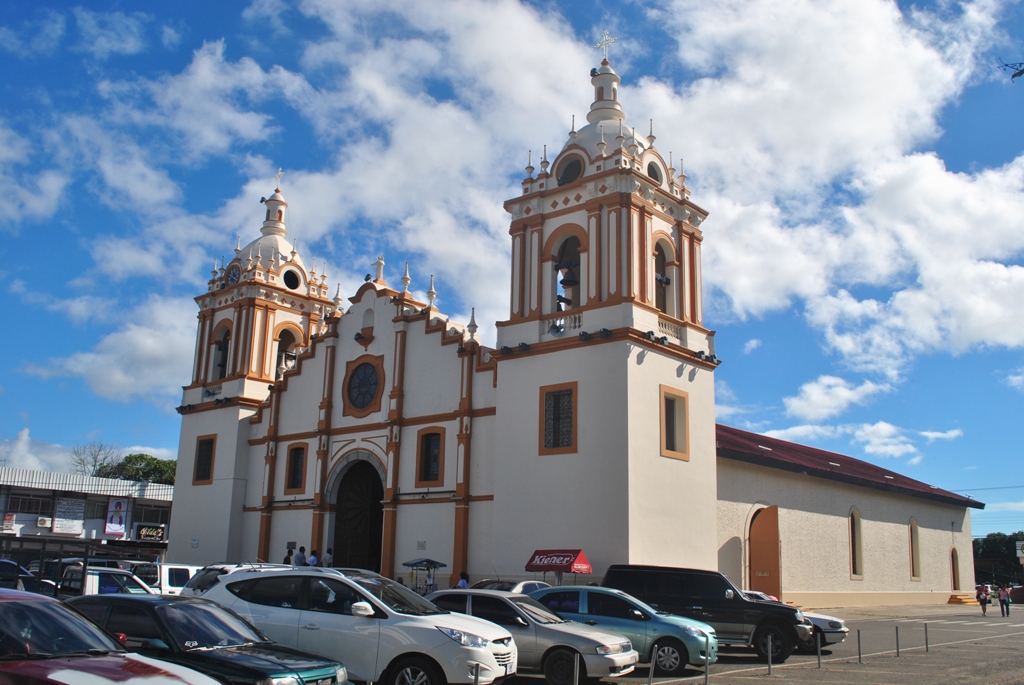
Santiago de Veraguas (Spanish pronunciation: [sanˈtja.ɣo ðe βeˈɾa.ɣwas]) is the capital of the province of Veraguas, in the Republic of Panama, and the district or municipality of the same name. Located in the countryside next to the Pan American Highway. Bounded on the north by San Francisco District, south by the District of Montijo, east by the District of Atalaya and west by the District of La Mesa. It has a population of approximately 60,000 inhabitants according to the data of the last census carried out in the Republic of Panama (2014).
The unclassified extinct Escoria language was spoken by indigenous peoples around present-day Santiago de Veraguas.
Santiago was founded by the people of Montijo and Santa Fe in the 17th century, who gathered in this place, decided to found a city that served as the starting center dispatches. It was established south of the Martin Grande river commonly called Los Chorros.
Santiago did not exist in 1606 when the Bishop of Panama, Don Antonio Calderon, wrote his account of the peoples who formed the Province of Veragua. The Santa Fe (the oldest), San Pedro del Montijo, Atalaya, Nuestra Señora de Remedios and Alanje.
Nor does the poor mapping made by Lorenzo del Salto, dated 1620.
The 2930 manuscript of the National Library in Madrid clearly states that Santiago existed in 1621 (folio 159 r °) which corroborates the hypothesis that its foundation must have taken place or in the late 16th century or the early 17th century. Dr. Alberto Osorio Osorio: Colonial Santiago de Veraguas, Panama 1989, 83 p
The chronicler Juan Diez De La Calle in his "Collection of Documents of the Civil and Ecclesiastical History of America", states that the "city of Santiago de Veragua was founded on October 23, 1621."
The writer gave an account where they made known Indian cities and towns of the kingdom of Tierra Firme. Other evidence about the existence of the old city of Santiago, as it is called in contemporary documents providing information about his transfer in 1637, come from other valuable references and unpublished documents.
Hub AI
Santiago de Veraguas AI simulator
(@Santiago de Veraguas_simulator)
Santiago de Veraguas
Santiago de Veraguas (Spanish pronunciation: [sanˈtja.ɣo ðe βeˈɾa.ɣwas]) is the capital of the province of Veraguas, in the Republic of Panama, and the district or municipality of the same name. Located in the countryside next to the Pan American Highway. Bounded on the north by San Francisco District, south by the District of Montijo, east by the District of Atalaya and west by the District of La Mesa. It has a population of approximately 60,000 inhabitants according to the data of the last census carried out in the Republic of Panama (2014).
The unclassified extinct Escoria language was spoken by indigenous peoples around present-day Santiago de Veraguas.
Santiago was founded by the people of Montijo and Santa Fe in the 17th century, who gathered in this place, decided to found a city that served as the starting center dispatches. It was established south of the Martin Grande river commonly called Los Chorros.
Santiago did not exist in 1606 when the Bishop of Panama, Don Antonio Calderon, wrote his account of the peoples who formed the Province of Veragua. The Santa Fe (the oldest), San Pedro del Montijo, Atalaya, Nuestra Señora de Remedios and Alanje.
Nor does the poor mapping made by Lorenzo del Salto, dated 1620.
The 2930 manuscript of the National Library in Madrid clearly states that Santiago existed in 1621 (folio 159 r °) which corroborates the hypothesis that its foundation must have taken place or in the late 16th century or the early 17th century. Dr. Alberto Osorio Osorio: Colonial Santiago de Veraguas, Panama 1989, 83 p
The chronicler Juan Diez De La Calle in his "Collection of Documents of the Civil and Ecclesiastical History of America", states that the "city of Santiago de Veragua was founded on October 23, 1621."
The writer gave an account where they made known Indian cities and towns of the kingdom of Tierra Firme. Other evidence about the existence of the old city of Santiago, as it is called in contemporary documents providing information about his transfer in 1637, come from other valuable references and unpublished documents.
Recent media